The Biology of Aging,Measured Daily
Biomarkers meet machine learning to predict and prevent decline.
Biomarkers
Pinch Force & Force Map
Physical Reserve & Forceprint
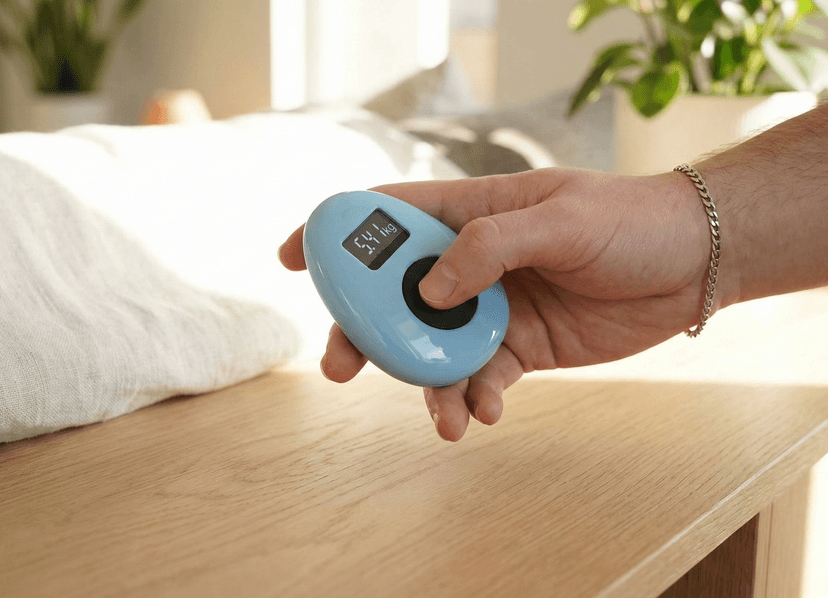
Our patent-pending resistor array with pressure-sensitive materials captures your unique forceprint with 0.01 lb accuracy. This provides a compact readout of physical reserve.
Unlike grip strength, pinch force declines earlier and is more sensitive to neuromuscular changes. Sustained drops correlate with disability and mortality across populations.
Track your baseline daily. Detect meaningful changes years before symptoms.
Tremor & Agility Tests
Neural Circuit & Neuromuscular Health
Our IMU captures tremor amplitude/frequency dynamics and agility metrics that reflect the state of neural circuits and neuromuscular function.
Enables earlier detection of Parkinson's, essential tremor, and medication side effects. Also captures balance, coordination, and reaction time changes.
Continuous tracking reveals patterns invisible to clinical snapshots.
Vibration Perception Threshold
Neuropathy Detection
VPT measures large-fiber nerve function. Rising thresholds flag peripheral neuropathy and fall risk years before clinical symptoms.
Critical for diabetes management and aging populations. Early detection enables intervention before irreversible nerve damage.
Prevent complications with longitudinal nerve health tracking.
Grounded in Geroscience
Our approach aligns with the geroscience framework: targeting mechanisms of biological aging to prevent multiple age-related diseases simultaneously.
Frailty
Pinch strength tracks physical reserve and functional decline — key markers of frailty syndrome.
Resilience
Longitudinal biomarker tracking reveals an individual's ability to maintain homeostasis under stress.
Physiological Reserve
Multi-modal measurements provide a comprehensive view of functional capacity across systems.
Research Collaborations
Partnering with leading academic institutions to validate Pebl's biomarkers and build the longitudinal dataset.
Johns Hopkins University
Clinical validation trials and geroscience research collaboration. Welch Center for Prevention partnership.
Stanford University
Aging and longevity research. ML model development for predictive biomarker analytics.
Join the Research
Help build the world's first longitudinal dataset for aging biomarkers.